Pages

Sunday, August 28, 2022

Zero Dark Thiry, Precision, and Supply Chain

 Last night I re-watched Zero Dark Thirty which is a great Hollywood rendition of the search for and ultimate killing of Osama Bin Laden.  No politics here and I just want to reflect on what the learnings are for us, especially in that final scene where we get to see execution with amazing precision.  

There is a lot to learn here for supply chain professionals and it all revolves around the word precision.  If there was one word which defined that mission, it is that word, precision.  I underline and bold it as it is a word to not forget. Precision is an outcome of two other key words: planning and practice.  This could become a new term in supply chain, or perhaps a new formula:  Prc = Pl*Prct.  Precision = planning multiplied by practice. Let’s look into this:

  1. Planning: If the Pandemic taught us nothing else it taught us the importance of scenario planning. This means you look at all the different scenarios which could impact your business and supply chain, you identify those things which are “early warning indicators” to let you know if the scenario is happening or not, you identify what the severity of the issue will be if it occurs, then you plan and execute a mitigation strategy if needed. This is similar to a FMEA except you do this for external events. 
    1. Note:  McKinsey and Company reports 37% of supply chains implemented some element of supply chain scenario planning and these were 2.0x more likely to not have supply chain disruptions
  2. Practice: This is an area business tends to lack and as the formula would imply, if your planning is 100 but you practice at 0 then your precision will be 0.  It is also something the military does extremely will. Think of the movie I am referencing where they have complete mock ups of where they are going, they knew when they went in the house, even at night, exactly where they were and they knew the name of every occupant.  They knew this because they practiced, and practiced and practiced.  How many companies do you know have great scenario plans but they just sit on a shelf somewhere and no one has looked at them, let a lone practiced them.  
This all leads to precision which is what supply chain is all about. Precision means a process is both reliable and repeatable. It means you do what you say and it means “9x%” is not good enough (Remember, you can be 95% on time but to the customer in the 5% part you are 100% not on time). Precision means each part of the chain can absolutely rely on the other parts of the chain to execute exactly what they are supposed to do without even checking. Another part of the military is when they go on missions and they do minimal or no talking with each other (Radio silence). They just expect you to do your part and there is no checking. 

Precision then leads to a world class customer experience.  Technology and even talent are means to get to precision.  If you have great technology but still cannot get precise in your execution then it was, what I described last week as FOMO technology. Technology which is “cool” but does not accomplishes much. 

So, lesson for today, recommit to precision, never say “good enough”, once you get to one level of precision, spend 5 minutes congratulating yourself and then move to the next level. 

With this, I leave you with the trailer of this incredible movie.  Next time you watch it, watch it with the thought of a precise supply chain in mind. What can you learn?


Sunday, August 21, 2022

My Thesis on FOMO for Logistics and Supply Chain Technology Has Stood The Test of Time

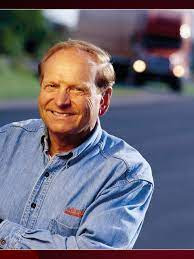
Paraphrase:  "We reduce the logistics' cost as % of GDP which results in lower costs for goods and services, which lifts the standard of living for all Americans" - Don Schneider


Don Schneider

That phrase, while I many not be getting it word for word, has stuck with me from the day I met him almost 30 years ago. 

First, I apologize as it has been a long time since I put thoughts on the blog about what is going on in the supply chain world.  I should have kept up with it better.  I just went back and looked at my last posting which was on January 19, 2022 and it addressed the issue of supply chain technology. 

Two quotes from that post really stand out:

"The "free money" aspect of the pandemic has also driven an explosion in supply chain / logistics technology. Again, some have driven huge value but by far the vast majority have not.  They have just been the recipients of a lot of money sloshing around in the economy looking for a place to land."

and:

"They [Supply Chain Practitioners] layer technology on top of technology and it still does not get them very far.  This is FOMO.  This is "I am going to try anything and everything because I am afraid I am going to miss out on the latest greatest thing". 

We are starting to see the realization that this technology, without good processes and without assets, is not helping very much. The aggregate outcome metric I like to use is the US Business Logistics Costs as a percent of the nation's GDP. After all the technology improvements we have made, in 2021, this cost was 8% of GDP which, according to the 2022 State of Logistics report issued by CSCMP, has not been this high since 2008.   

Source: CSCMP 2022 SOL Report

Ultimately, we as an industry have to be measured on whether we are delivering value (higher service at lower costs) or not.  This table and information would say we are not doing that.  From the same report, we can trace these costs back to 2012:

Source CSCMP 2022 SOL Report and 10xLogistics Analysis

The graph is up 2bps since 2012 (coming out of a deep recession) and has, more importantly, changed the game significantly since 2018.  Some may say is only 2bps so what does it matter and my point is you would think we could get improvement with all the technology spend we have incurred. 

Do not get me wrong as there is a lot of good in our newest supply chain technology and there are certain aspects of running a supply chain I could not live without however, in the aggregate, logistics has become more costly for less service. 

My question for the supply chain industry is: "Would Don be Happy with this result"?  I will leave you to answer that on your own.  

This is something the supply chain industry has to address and hopefully people will talk about this at CSCMP EDGE conference this year.  Engage on Twitter with the hashtag #logtech


Wednesday, January 19, 2022

Beware FOMO and New Supply Chain Technology

 In November of 2019 I wrote an article entitled "What Do FOMO and LinkedIn Have To Do With Supply Chain". FOMO is short for "Fear of Missing Out" and the general thesis of my article was if you become consumed with chasing every rabbit down every rabbit hole for "fear of missing out" then you will likely not get much done. 

The same can be true about LinkedIn. I wrote this in 2019 and I submit it has become 100x worse than when I wrote this article. 

And yes, we can somewhat blame the pandemic for this phenomenon in supply chain.  Ever since everyone has been home there has been an explosion of podcasts and home grown "T.V." shows discussing supply chains.  Some of them are hosted by people who have worked for a very short time, if at all, as a practitioner of supply chains.  

The "free money" aspect of the pandemic has also driven an explosion in supply chain / logistics technology. Again, some have driven huge value but by far the vast majority have not.  They have just been the recipients of a lot of money sloshing around in the economy looking for a place to land.  

Practitioners have some culpability in this as well.  Many have scrambled to do something - anything to show their leadership they are trying everything to overcome the effects of disruption.  So, what do they do?  They layer technology on top of technology and it still does not get them very far.  This is FOMO.  This is "I am going to try anything and everything because I am afraid I am going to miss out on the latest greatest thing".  Here are my simple few suggestions for the practitioner to avoid this trap:

  1. Do the detailed work BEFORE you talk to a technology company:  This means you have to process map out how your business operates.  You need to identify the key metrics you are using and you have to identify what success looks like.  Use the Amazon methodology which is just what Covey taught us when he said, "Begin With The End in Mind".  Write the press release you will release 4 years from now.  What will you have accomplished. 

  2. Operate Manually First if at All Possible:  This will allow you to be incredibly flexible as you "test and learn" all different ways of getting things accomplished. 

  3. Follow the Tom Brady rule of focusing and ignoring all the noise. (See my posting on this: What Separates "Vital Few Metrics" from "Nice to Know" Metrics - And What Can We Learn from Tom Brady...). 

  4. Write the spec! This is not necessarily hard work but some may find it tedious.  This is the work where you get as specific as possible on what you really need and what will really add value to your organization.  The more detailed this is written the more likely it is you will not get enamored by "shiny spinning plates" but rather will identify and get what you really need.  

  5. Then and only then do you start inviting in technology providers and identify which is best to fill the gaps you identified by going through the 4 step process above. 
I am not saying not to "shop around and learn" but look at those interactions as learning - nothing more and nothing less.  Realize that as soon as you step into the bazaar that is a trade show, full of technology shiny toys, you are at high risk of FOMO kicking in and you being distracted by things that you do not need.  Much like going into a high tech electronics store and walking out with $1,000 of technology that you now "absolutely have to have" but 1 day ago you had no idea you "needed", you run the risk of doing the same for your company.  Except in this case, it could cost millions.

When you feel you are starting to get caught up in the FOMO mania, I suggest activating the "breathe app" on your Apple Watch and, just breathe. 

To that end, tonight, let's just meditate:


Great Update from Craig Fuller on Supply Chain in 2022

 I am sure many in this community follow Craig Fuller from Freightwaves.  I thought this was a very good interview on Bloomberg so I thought I would post it here.